RAID log vs risk register: which one do you actually need?
Published 22 November 2026
Most agency teams that say they keep a RAID log are really keeping a risk register with a longer name. The R column is full. The A, I and D columns are empty, or were last touched at kickoff.
That matters, because on agency work the risk is rarely what catches you out. It is the assumption nobody checked, the issue that sat in a Slack thread for a week, or the client asset that was due on Monday and arrived on Thursday.
This post sets out what each document is for, where they overlap, and how to decide which one your project needs. There is a RAID Log template in the vault at the end if you want to skip the setup.
The short answer
A risk register tracks things that might happen. A RAID log tracks things that might happen, things you are relying on, things that have already happened, and things you are waiting for. If your project depends on other people, and almost every agency project does, you need the RAID log.
What a risk register is good at
A risk register is a list of uncertain events, each scored for likelihood and impact, with an owner and a planned response. It answers one question well: what could hurt this project, and what are we doing about it?
It is the right tool when risk is the main thing leadership needs to see. Large programmes, regulated work and anything reporting to a formal board will usually expect one. It is also the format finance and legal teams know best.
Its weakness is reach. A risk register has no natural home for an assumption buried in the estimate, a problem that is already live, or a task owned by someone outside your team. Those things either get squeezed into the risk column or left out altogether.
What a RAID log adds
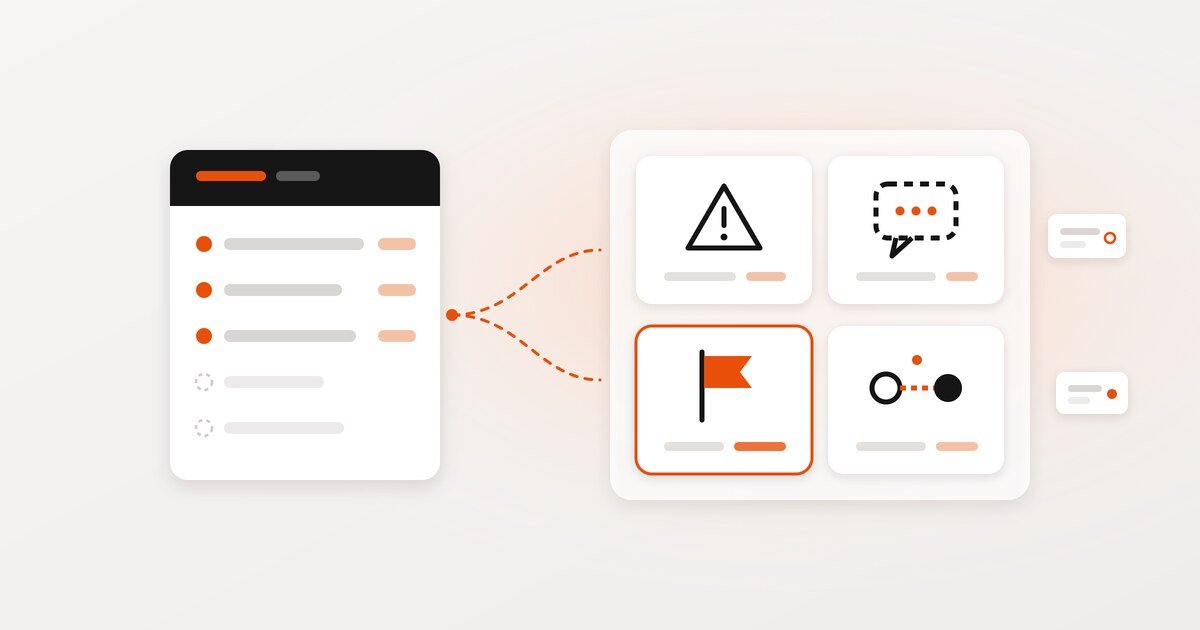
RAID stands for risks, assumptions, issues and dependencies. Each part catches something a risk register misses.
Risks. Something that might happen and would hurt delivery if it did. Treated exactly as in a risk register: likelihood, impact, owner, response.
Assumptions. Something you are treating as true without proof, such as “the client will supply final copy by week three”. Every estimate rests on a handful of these, and each one needs an owner and a date by which it is confirmed.
Issues. A risk that has already happened, or a problem nobody saw coming. Issues need an owner, an action and a date, not a score.
Dependencies. Something you need from someone else before you can move: client approvals, supplier deliveries, another team’s build. This is where most agency timelines actually slip.
Items also move between the four. An assumption that turns out to be false becomes an issue. A dependency that is running late becomes a risk to the launch date. A good RAID log makes those moves visible instead of losing them between documents.
Side by side
| Risk register | RAID log | |
|---|---|---|
| What it tracks | Uncertain future events | Risks, assumptions, live issues and dependencies |
| Question it answers | What could go wrong? | What could go wrong, what are we relying on, what is wrong now, and who are we waiting for? |
| Best suited to | Large programmes and formal governance | Client projects with lots of handoffs |
| Who reads it | Sponsors, boards, the PMO | The delivery team and the client lead, every week |
| Review rhythm | Monthly, or at stage gates | Weekly, in the status meeting |
| How it usually fails | Scores never change after kickoff | Becomes a dumping ground where nothing is ever closed |
Same family, different job. A risk register is one quarter of a RAID log.
Which one does your project need?
Four questions settle it.
Does the work depend on the client or a supplier delivering something? Then you need dependencies tracked, which means a RAID log.
Does the estimate rest on things nobody has confirmed yet? Then you need assumptions tracked. RAID log again.
Is someone above you asking for a formal risk view? Report it from the risk section of your RAID log, or keep a separate register if their format demands it.
Is the project small, internal and short? A risk register, or even a few lines in the status report, may be all it needs.
For most agency work the answer is a RAID log, with its risk section doing the job a separate register would have done. One document, one owner, one weekly review.
Keeping a RAID log alive
RAID logs fail in a familiar way. They are built carefully at kickoff, nobody opens them again, and by month two they describe a project that no longer exists. Four habits prevent that.
Review it inside the weekly status meeting. Not as a separate session. Five minutes, open items only, oldest first.
Give every line an owner and a date. An item with no owner is a note, not an action.
Close things. Resolved issues and confirmed assumptions move to closed, with the date. A log where nothing ever closes stops being trusted.
Watch the age of open items. How long something has been open matters more than how it was scored. A dependency that has been waiting three weeks is a threat to the timeline whether or not anyone has rated it.
Kept short and current, a RAID log gets read. Left long and stale, it becomes the document someone digs out after things have gone wrong, to prove the problem was written down somewhere.
A risk register tells you what might go wrong. A RAID log also tells you what you are relying on, what is already wrong and who you are waiting for. On agency work, those are usually the things that hurt.
Risks, assumptions, issues and dependencies in one sheet, each with an owner, due date and status, plus a dashboard of open items by type, age and owner.
13 templates live · lifetime access · 14 day refund